South-facing main entrance
Is a South-facing main entrance bad?
A South-facing entrance is not bad in itself. What matters is which of the eight South padas the door falls in: S3 and S4 are among the best, S5 to S7 the hardest.
Answered by Gurmeet Singh, Vastu practitioner since 2020 · updated
What do these zones govern?
South (S)
When balanced, South delivers fame, relaxation and the spiritual understanding associated with deep music — inhabitants are recognised yet at peace.
A toilet in the South makes the inhabitants desperate for fame yet unable to relax; for businesses it damages brand and goodwill.
Remedy: Use South for relaxation seating, TV and fame-related imagery. Avoid water or toilets in this zone.
The South zone in the Vastu guide →What does the Vastu library say?
Four entrance myths worth unlearning
Ganesha at the door, north-east-facing only, three aligned doors, and toilets near the entrance — the common myths, examined.
Four myths about entrances deserve to be retired. Ganesha at the entrance: the tradition of placing a figurine at the front door reduces the first-worshipped god to a gatekeeper, and a back-to-back pair means you turn your back on him every time you leave. The tradition is only 250 years old and is not supported by the old texts. North-east-facing only: case studies from several thousand homes show that 80% of the most successful businessmen and politicians live in west- or south-facing properties. What matters is the exact 11.25° segment of the door, not the general compass direction.
Three aligned doors are inauspicious: no ancient Vastu text actually says this. Old Delhi, old temples, and English palaces routinely use aligned doors and flourished for centuries. A toilet near the entrance is wrong: only if the toilet sits outside the disposal zones. When the toilet is placed correctly — in the zone of disposal — it almost always lands next to the ideal entrance, because those two zones are geographical neighbours.
Read it in the Vastu library →The 32 entrance positions in brief
360° divided by 32 gives 11.25° per position. Each is ruled by a devta, and the effect of a door there is the devta's signature.
The full compass of 360° is divided into 32 segments of 11.25° each. Each segment is the seat of a specific energy field named, in the old texts, after its ruling devta. A door placed there receives that signature — for better or worse. E3, ruled by Jayant, is a classical auspicious entrance: money, profits, and success. E1, ruled by Shikhi in the zone of water, gets disturbed when a door (which disposes rather than holds) is placed there; fire accidents and short temper follow. The full 32-entrance table is one of the oldest Vastu diagnostics: identify the segment the front door sits in, match the symptoms in the house to the effect described, and you have the root cause — often in minutes.
Read it in the Vastu library →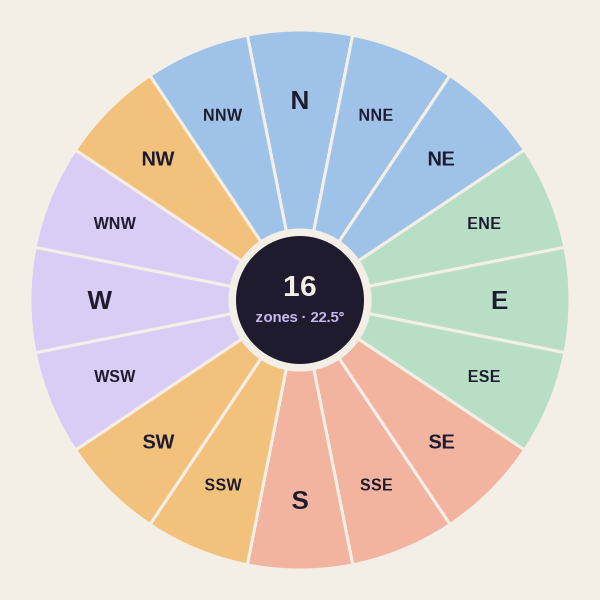
Sources
Classical texts: Mayamata of Mayamuni and Manasara on Architecture and Sculpture. True north for your plan: NOAA magnetic declination calculator.
Replies (6)
If you'd like me to read the whole plan, submit it at spaceflowmapai.com/consult or message the desk on WhatsApp: India & Asia +91 98781 37212, Americas +1 703 507 5668. I read every case personally.